
Virtual Clinical Experiences (VCE)
Picture this breakthrough moment: A student in rural Virginia logs in from their apartment and seamlessly joins classmates on UVA Grounds for an interactive clinical simulation. They practice patient interviews for clinical psychology, analyze real-time medical device data, and collaborate on complex case studies with peers from multiple disciplines. This isn't a vision of the future, it's the reality we are building through our groundbreaking pilot partnership.
UVA made history as the first university in North America to partner with Virtual Clinical Experiences (VCE), creating a new paradigm for how we prepare tomorrow's healthcare professionals. This pilot initiative is designed to test how VCE’s state-of-the-art technology can integrate with UVA’s world-class curriculum to create a more flexible and accessible ecosystem for experiential learning.


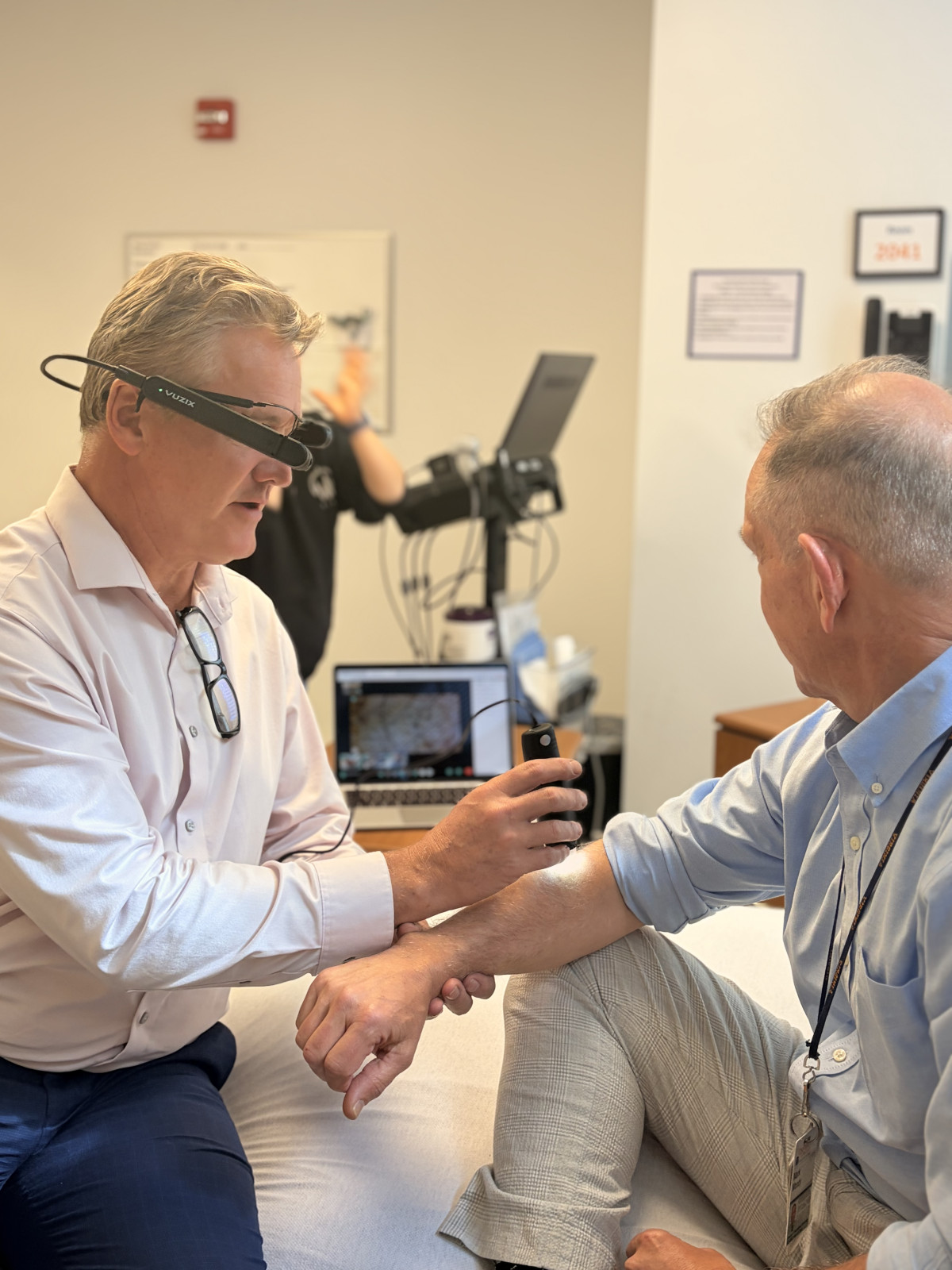
Pilot Goals & Potential Impact
Our trial is actively investigating the potential of VCE to transform clinical education. Our key objectives are:
- Expanding Access: To test a scalable model for overcoming geographic disparity by connecting students in remote communities with live clinical simulations on UVA Grounds.
- Fostering Interdisciplinary Collaboration: To explore how shared virtual environments can facilitate joint learning sessions between students in clinical psychology, nursing, and medicine.
- Addressing Training Capacity: To evaluate the effectiveness of high-fidelity virtual experiences in supplementing in-person clinical hours and mitigating placement shortages.
- Empowering Faculty Innovation: To support instructors in designing and testing interactive simulations that bring theory to life, providing a new toolkit for experiential learning.
Early Impressions from the Pilot
Student Feedback
"It allows us increased opportunities to immerse ourselves in clinical experiences with instructor feedback in real time."
- First-year graduate nursing student
"It was great visual learning on how to do assessments, and it is a very convenient method for a large classroom setting."
- First-year graduate nursing student
Instructor Feedback
"From my perspective, we often say we’d love to be a “fly on the wall,” because there is just something about being able to witness an interaction without your presence impacting the exam room environment. This technology allows us to have learners witness common and complex patient interactions without interfering with the patient-provider relationship. I am excited to use the tech more in the future for my other classes. The ability to work with VCE for our students to participate in patient encounters in Ukraine, for example, will allow our students global perspective without financial burden and standing in a TSA line!
When I’m showing students how to look into a patient’s ear, I can’t see what they see. With this, I can put the otoscope in a patient’s ear and I know they see exactly what I see, and in real time. They’re able to participate in the experience without being in the exam room smashed up against the wall with the patient uncomfortable with so many people talking...Our program is hybrid, and this tech allows them to stay connected and still have experiences that are real even if I only get to see them 6x a semester."
- Assistant Professor Dawn Bourne, DNP, RN, FNP-C, HEC-C
Learn more about the student and instructor VCE experience in this article, originally published in the January 2026 edition of the Virginia Nursing Legacy (VNL) magazine.

Do You See What I See?
Dawn Bourne, DNP program, victual clinical experience, VCE, advanced practice nurses learning assessment skills, Global Education Group
Learn More
What is VCE?
VCE (Virtual Clinical Experiences) is a modular, cloud-based platform for experiential education. It enables live and recorded clinical sessions, and AI-powered learning modules across healthcare and related fields
What can I use it for?
Use the technology to expand clinical training capacity, enhance curriculum with real-world cases, foster interdisciplinary and global collaboration, support regulatory compliance, and reduce administrative workload.
What are the technology requirements?
VCE requires only a standard laptop, internet connection, and a web browser. Optional tools, like a digital stethoscope and otoscope, can further enhance the clinical experience.
How does VCE ensure data security and patient privacy?
VCE protects data and patient privacy through multiple security layers. This includes data encryption, strict access controls, and audit trails. Importantly, VCE allows clinicians to pause live streams at any time to ensure patient privacy and consent are respected. VCE complies with regulations like HIPAA and GDPR and incorporates patient consent workflows.
How is this different from telehealth?
VCE is fundamentally an educational platform, not a healthcare delivery tool. While telehealth connects patients directly with providers for clinical care, VCE enables students and faculty to observe, participate in, and reflect on real or simulated clinical encounters for learning purposes. It supports interactive simulations, live observation, and debriefing, often with multiple learners and educators involved.
Can VCE connect learners internationally?
VCE provides early, authentic exposure to real clinical practice through live virtual observation of primary care consultations in the UK and/or Ukraine. Students observe real patient–clinician interactions, gain insight into professional judgment and healthcare systems, and reflect on the realities of clinical practice in an international context.
Follow our journey.
We are actively documenting our findings and exploring the potential of this technology. If you are interested in learning more about our pilot project, research goals, or potential collaborations, please contact Becky Reid at rdr7b@virginia.edu.